Schema bimoCommon.v1
Schema bimoCommon.v1 : Typ złożony ValidationError
Typ złożony ValidationError
Opis
Błąd walidacji
Typ zwracający informację dot. błędów walidacji
Przestrzeń nazw http://api.big.pl/bimo/v1
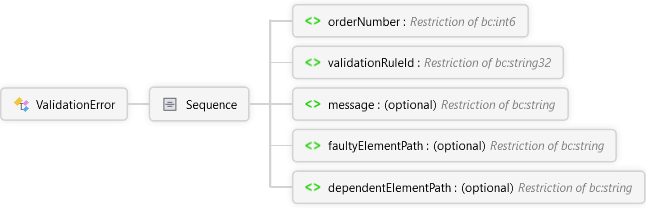
Diagram
Element dependentElementPath Element faultyElementPath Element message Element validationRuleId Element orderNumber Sequence Typ złożony ValidationError
Przegląd
ValidationError
Błąd walidacji
Typ zwracający informację dot. błędów walidacji
Sequence
orderNumber Typ prosty int6
Numer kolejny błędu
Numer kolejny błędu walidacji wykrytego w komunikacie. Numeracja zaczyna się od „1”.
validationRuleId Typ prosty string32
Kod błędu
Kod błędu walidacji
message optional Typ prosty string
Opis błędu
Opis błędu walidacji
faultyElementPath optional Typ prosty string
XPath
XPath do błędnej ścieżki komunikatu
dependentElementPath optional Typ prosty string
Xpath do pola zależnego
Xpath do pola zależnego, względem pola, do którego zgłoszony został błąd (@ValidationError.faultyElementPath)
Używany przez
Źródło
<xs:complexType name="ValidationError" xmlns:xs="http://www.w3.org/2001/XMLSchema">
  <xs:annotation>
    <xs:documentation>
      <div class="nazwa pl-PL" xmlns="http://www.w3.org/1999/xhtml">Błąd walidacji</div>
      <div class="opis pl-PL" xmlns="http://www.w3.org/1999/xhtml">Typ zwracający informację dot. błędów walidacji</div>
    </xs:documentation>
  </xs:annotation>
  <xs:sequence>
    <xs:element name="orderNumber" type="bc:int6">
      <xs:annotation>
        <xs:documentation>
          <div class="nazwa pl-PL" xmlns="http://www.w3.org/1999/xhtml">Numer kolejny błędu</div>
          <div class="opis pl-PL" xmlns="http://www.w3.org/1999/xhtml">Numer kolejny błędu walidacji wykrytego w komunikacie. Numeracja zaczyna się od „1”.</div>
        </xs:documentation>
      </xs:annotation>
    </xs:element>
    <xs:element name="validationRuleId" type="bc:string32">
      <xs:annotation>
        <xs:documentation>
          <div class="nazwa pl-PL" xmlns="http://www.w3.org/1999/xhtml">Kod błędu</div>
          <div class="opis pl-PL" xmlns="http://www.w3.org/1999/xhtml">Kod błędu walidacji</div>
        </xs:documentation>
      </xs:annotation>
    </xs:element>
    <xs:element name="message" type="bc:string" minOccurs="0">
      <xs:annotation>
        <xs:documentation>
          <div class="nazwa pl-PL" xmlns="http://www.w3.org/1999/xhtml">Opis błędu</div>
          <div class="opis pl-PL" xmlns="http://www.w3.org/1999/xhtml">Opis błędu walidacji</div>
        </xs:documentation>
      </xs:annotation>
    </xs:element>
    <xs:element name="faultyElementPath" type="bc:string" minOccurs="0">
      <xs:annotation>
        <xs:documentation>
          <div class="nazwa pl-PL" xmlns="http://www.w3.org/1999/xhtml">XPath</div>
          <div class="opis pl-PL" xmlns="http://www.w3.org/1999/xhtml">XPath do błędnej ścieżki komunikatu</div>
        </xs:documentation>
      </xs:annotation>
    </xs:element>
    <xs:element name="dependentElementPath" type="bc:string" minOccurs="0">
      <xs:annotation>
        <xs:documentation>
          <div class="nazwa pl-PL" xmlns="http://www.w3.org/1999/xhtml">Xpath do pola zależnego</div>
          <div class="opis pl-PL" xmlns="http://www.w3.org/1999/xhtml">Xpath do pola zależnego, względem pola, do którego zgłoszony został błąd (@ValidationError.faultyElementPath)</div>
        </xs:documentation>
      </xs:annotation>
    </xs:element>
  </xs:sequence>
</xs:complexType>
Zobacz także